
This summer and fall, Missouri Conservation Corps naturalist Laura Semken hosted seven Monarch Journey programs with 83 youth, 24 MU students, and 57 adults. These programs explored monarch life cycles and conservation efforts through habitat restoration. Opportunities to engage in environmental stewardship were also offered in the form of Monarch Watch‘s monarch tagging program where tags were gently placed on a migrating monarch to better understand the path, length, and timing of their journey to Mexico.
Program locations included Laura Speed Elliott Middle School in Boonville, Mr. Miller’s Magic Meadow, Bonnie View Nature Sanctuary, MU Gustin Golf Course and the Big Muddy National Fish and Wildlife Refuge.
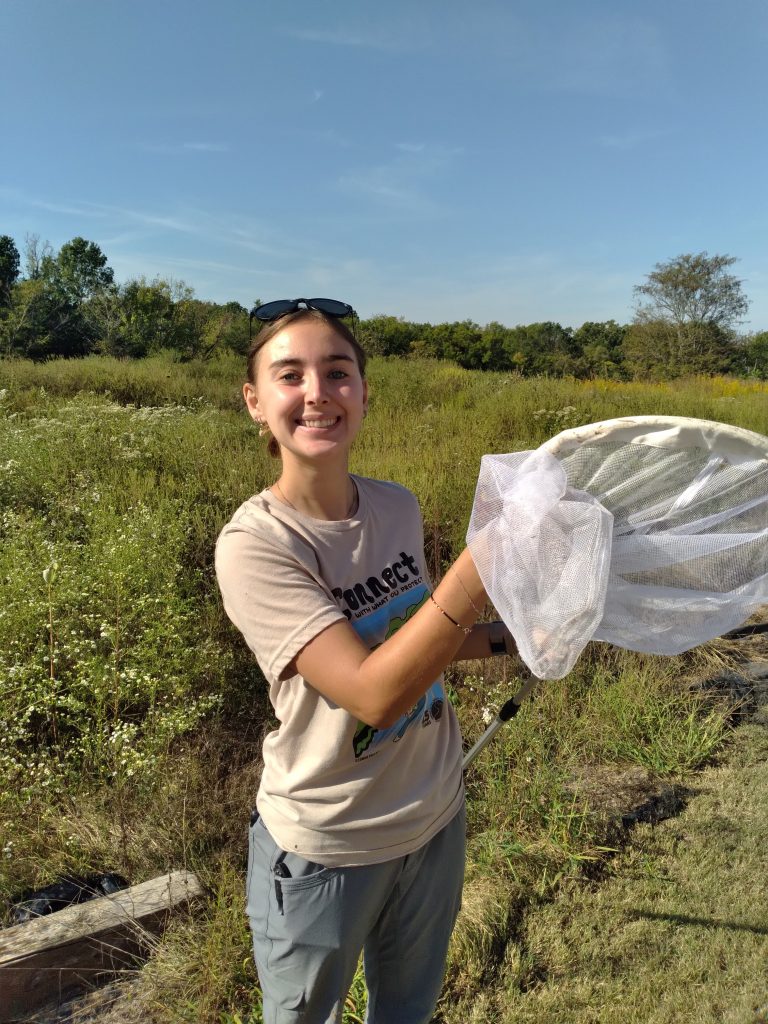 Addison Albaugh catches her first monarch at the Big Muddy National Wildlife Refuge.
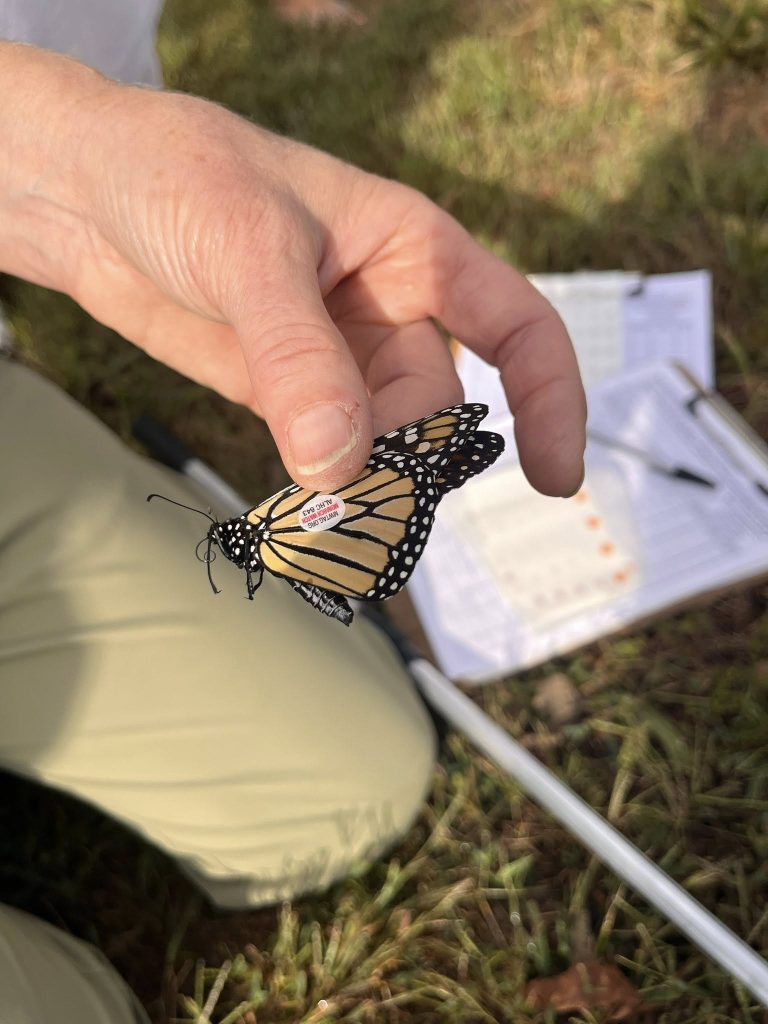 A monarch tagged and ready to release at Bonnie View Nature Sanctuary. Photo by Melanie Cheney
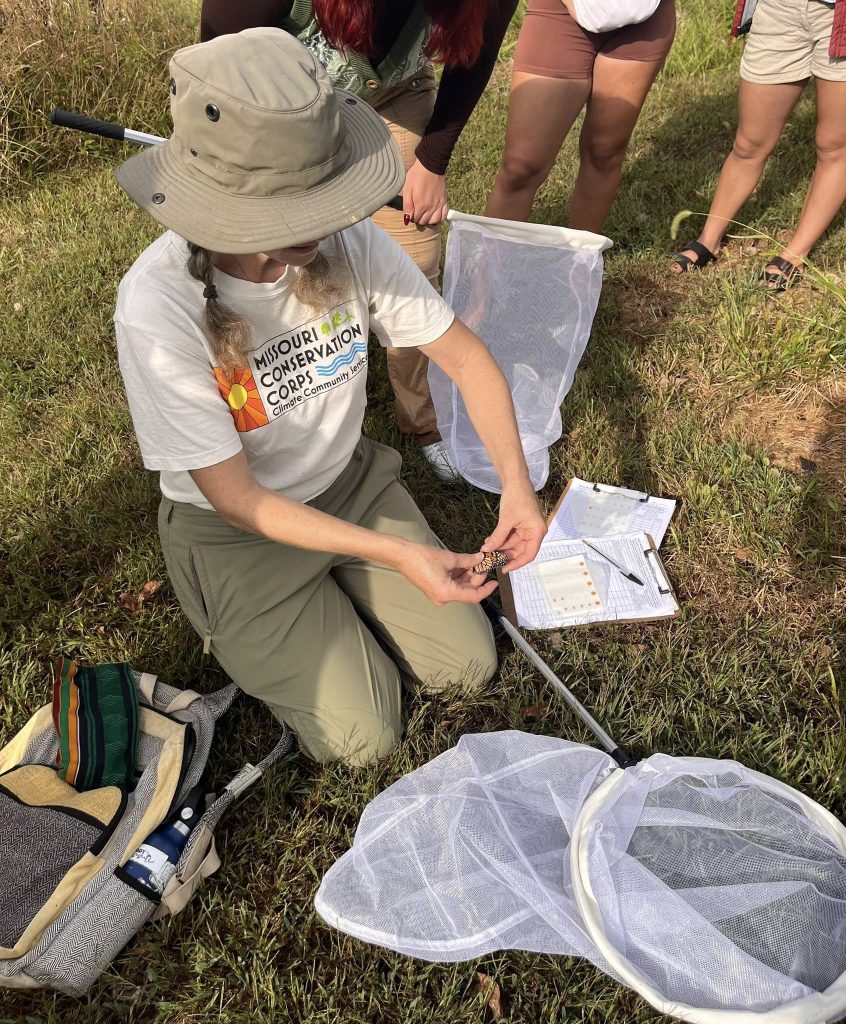 Laura Semken demonstrating monarch tagging at Bonnie View Nature Sanctuary. Photo by Melanie Cheney
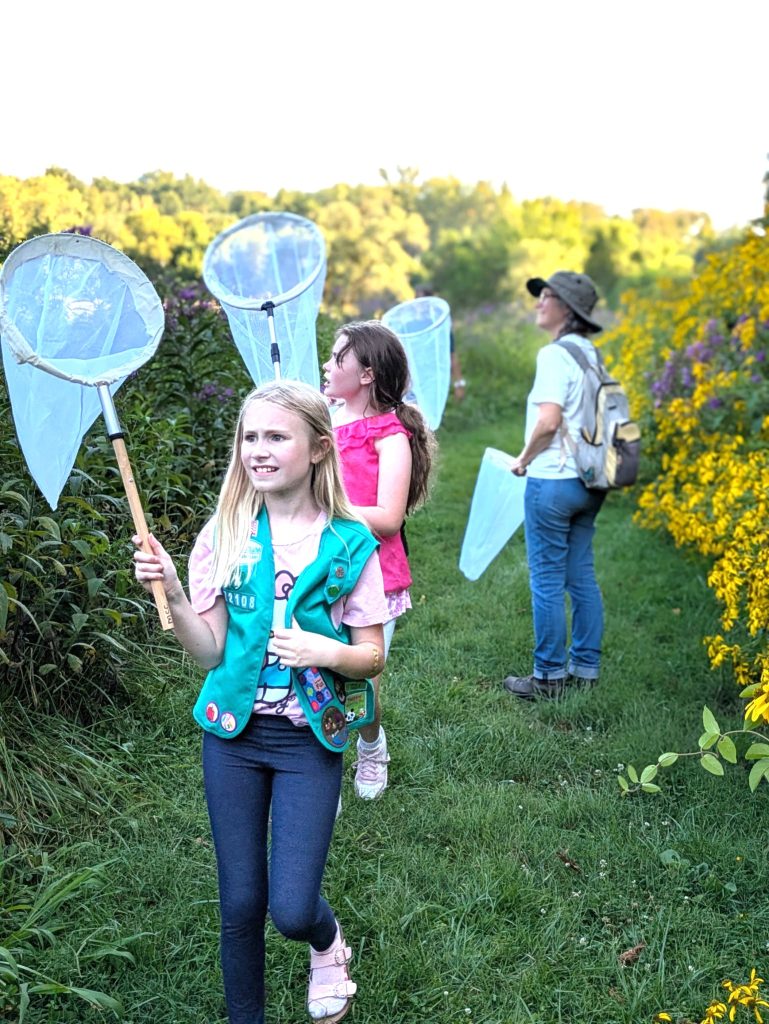 The Girl Scouts in Boonville caught so many monarchs in Mr. Miller’s Magic Meadow, they ran out of tags!
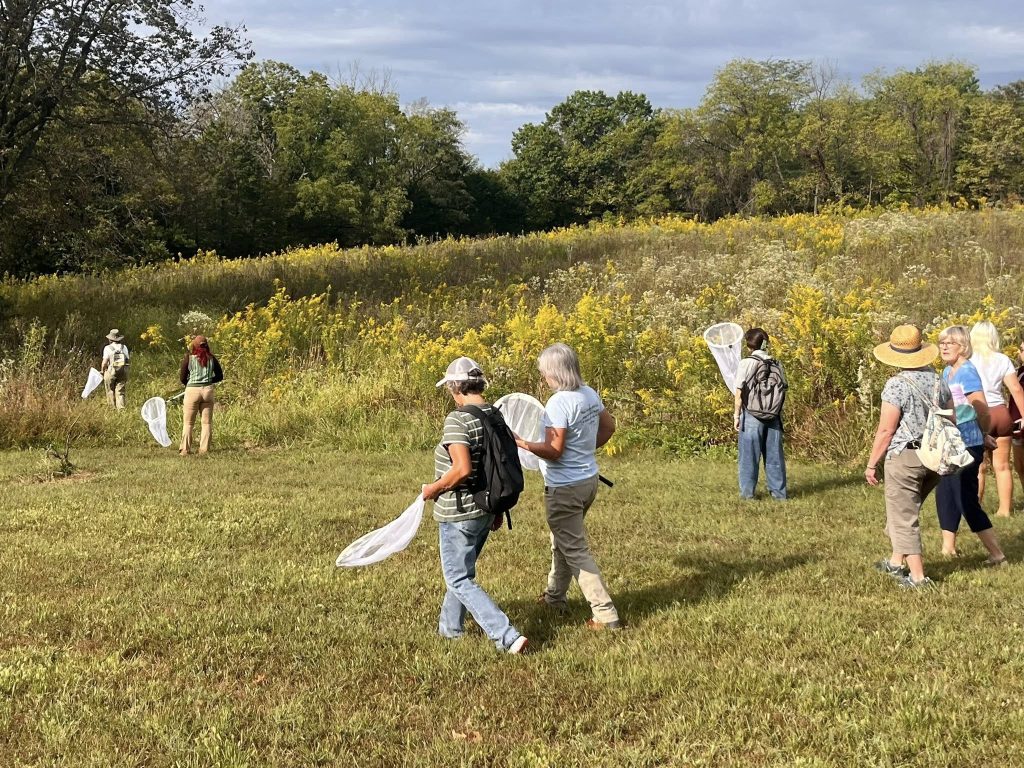 A perfect day for tagging monarchs at Bonnie View Nature Sanctuary! Photo by Melanie Cheney
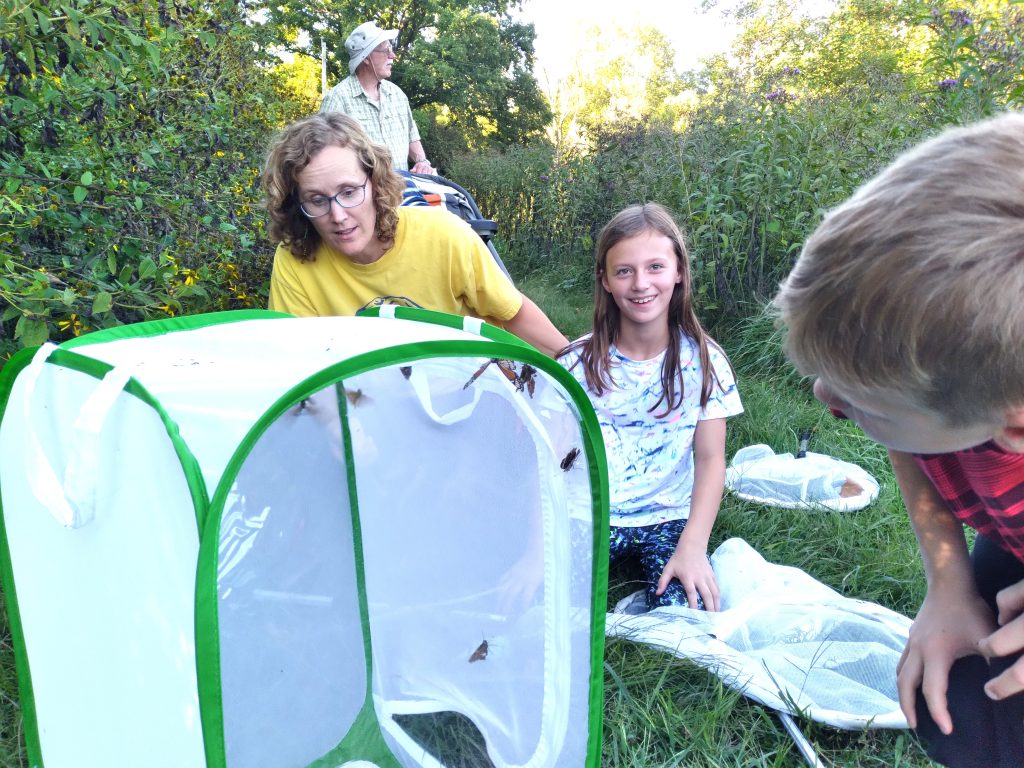 Catching insects in Mr. Miller’s Magic Meadow.
Family Fun in the Field
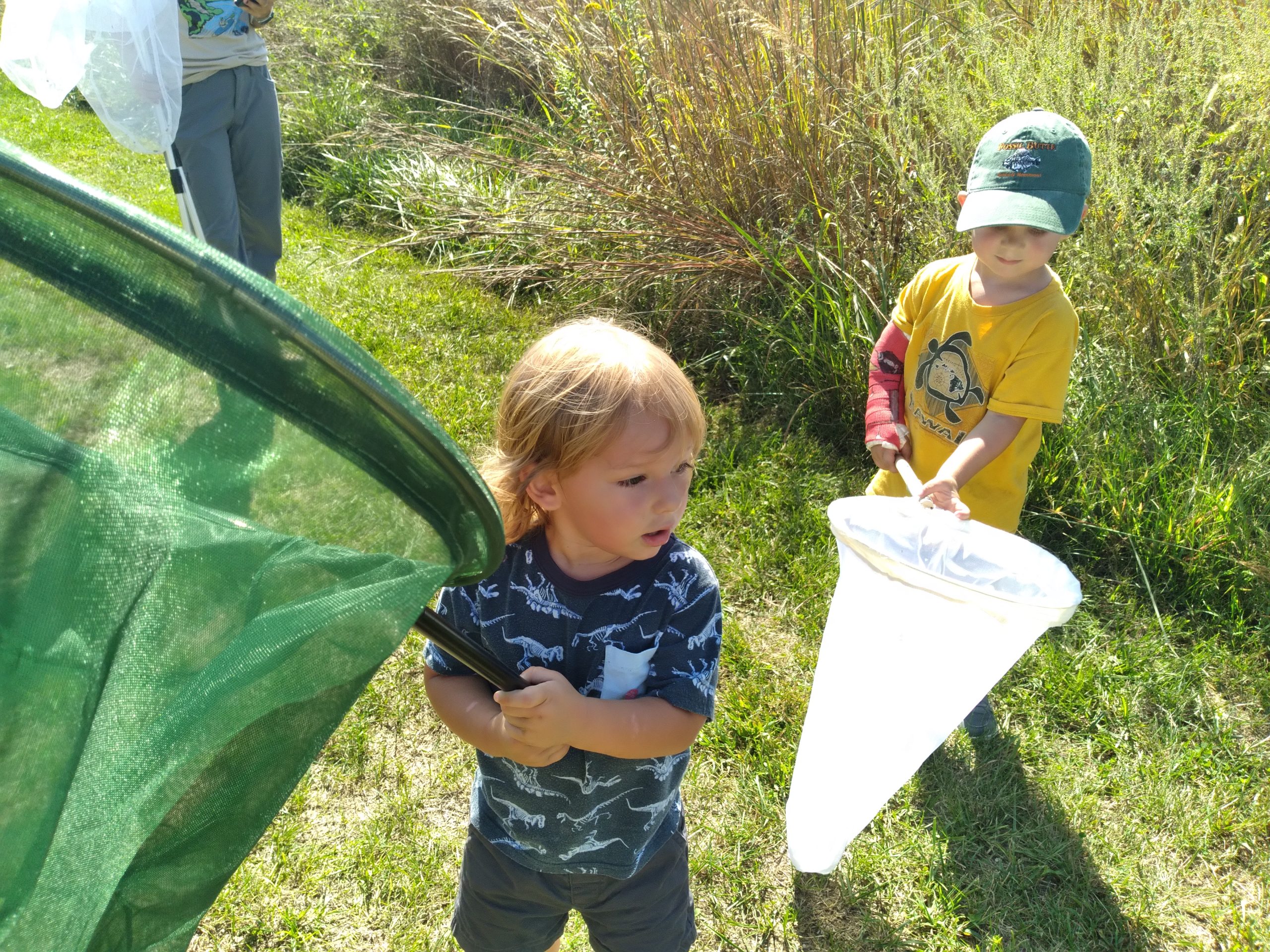
Two of the programs were especially designed for families to engage with monarch conservation. An interactive game called ‘Monarch Migration’ allowed youth to roll dice and follow the path to Mexico. Along the way, the “Monarchs” encountered “helpers” like a pollinator garden or “hazards” like loss of habitat. Youth were also invited to make a monarch puppet, but of course, the most popular activity was getting to practice catching insects!
Mapping Milkweed
In addition to the Monarch Journey programs, Laura partnered with the Big Muddy National Fish and Wildlife Refuge to design and conduct monarch life stage surveys to better understand how milkweed and habitat was being utilized by monarchs at the refuge. Surveys were conducted at Overton Bottoms South, beginning in June and continuing through mid-September. Over the course of 11 visits, 6 volunteers and 3 staff spent 90 hours surveying the milkweed plots.
First, eight milkweed plots containing at least 50 or more milkweed plants were mapped in June. Next, volunteers began surveying the plants for eggs and larva. If adults were seen, they were documented as well. Then, a spreadsheet was designed to document all of the collected data. The data was also sent to Journey North, a non-profit that maps sightings of all of the life stages of the monarch.
The Overton Bottoms South Unit at the Big Muddy NFWR hosts eggs and caterpillars throughout the entire summer, from June through September, which means that both 2nd and 3rd generation monarchs are utilizing the milkweed. Overall, 359 eggs and 192 larvae were found, and the most eggs were found on August 25th at 130 eggs.
Observations and data collected from the milkweed plots included if there was a preference between milkweed plots that were closer to the roadside or farther in the prairie, finding out if monarch females had a preference in direction in which they laid their eggs, and the average plant height in the plots where monarch eggs and larvae were found. By investigating these questions, refuge staff can better understand how different milkweed plots are being used by monarchs and help inform future management decisions.
Monarch Moments
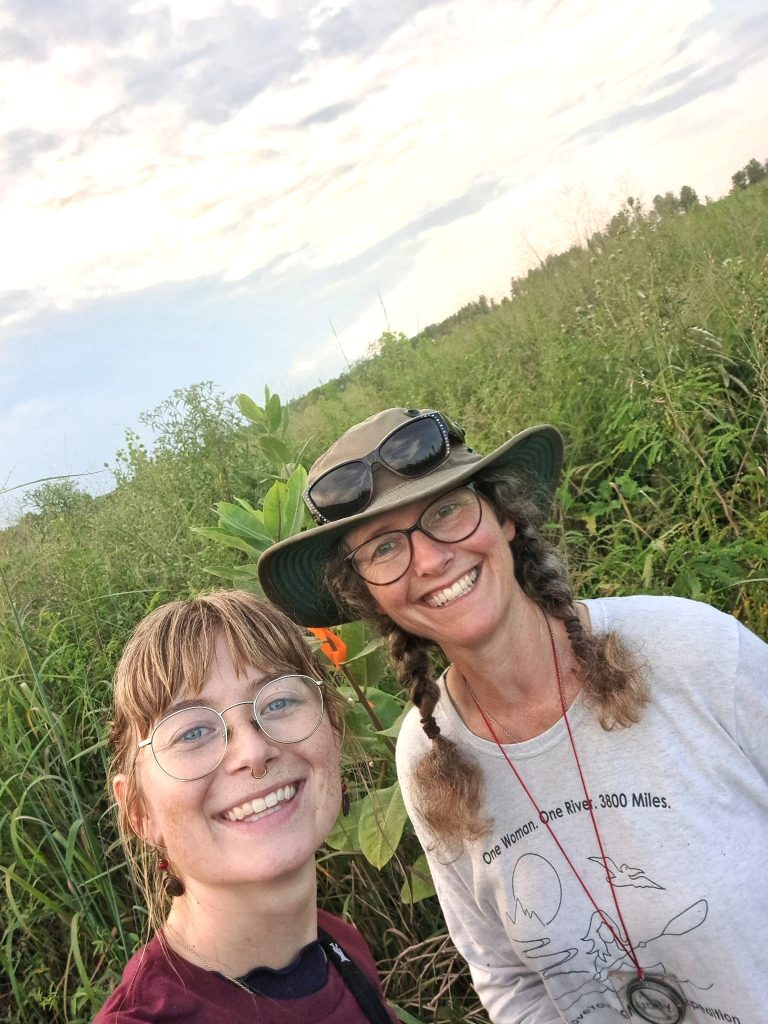
All in all, volunteers had fun diving into the prairie and getting covered in plant material. Wading though mature flowers and grasses, finding deer beds, hearing birds sign from giant sunflowers—a calm and invigorating experience all at once.
One volunteer asked, “How was your day?”
The reply was a satisfied sigh with a single sentence: “I am so glad to be here.”
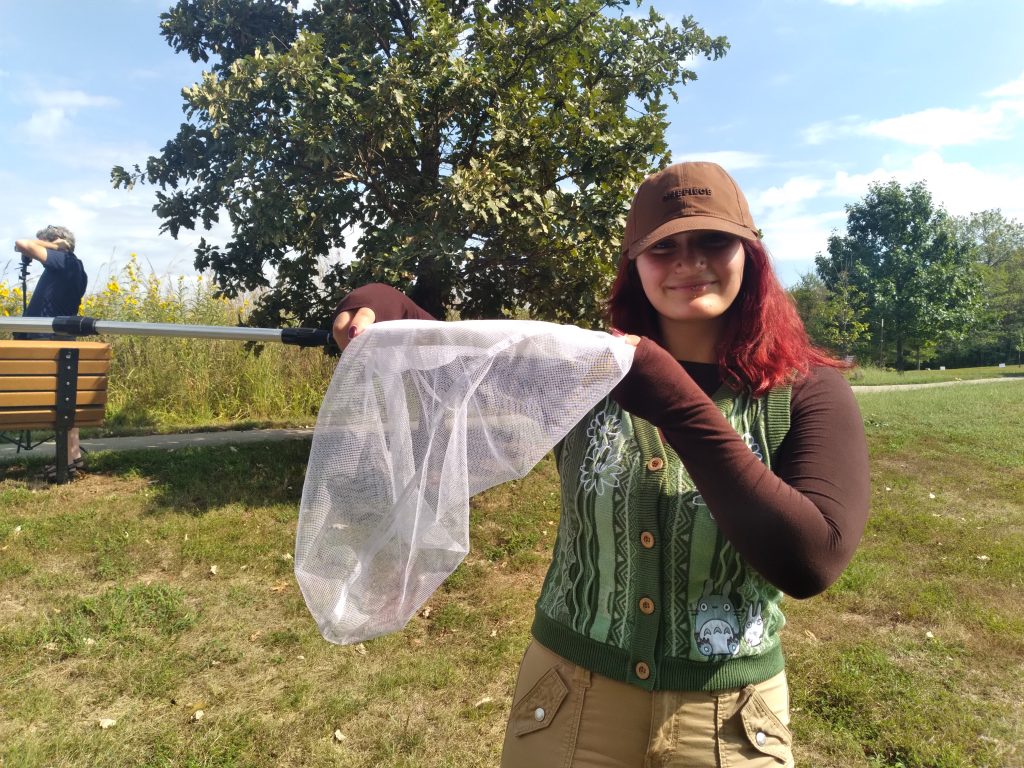 An MU student catches a monarch butterfly in her net at Bonnie View Nature Sanctuary.
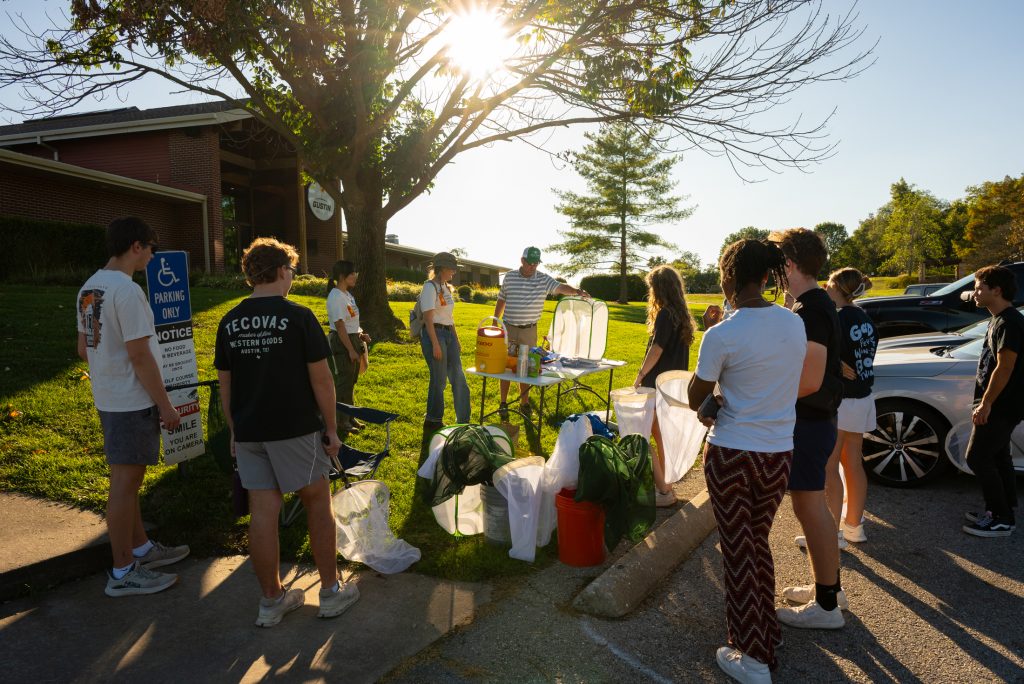 Laura Semken and Isaac Breuer prepare MU students to search for monarch butterflies. Photo by Stephen Bybee
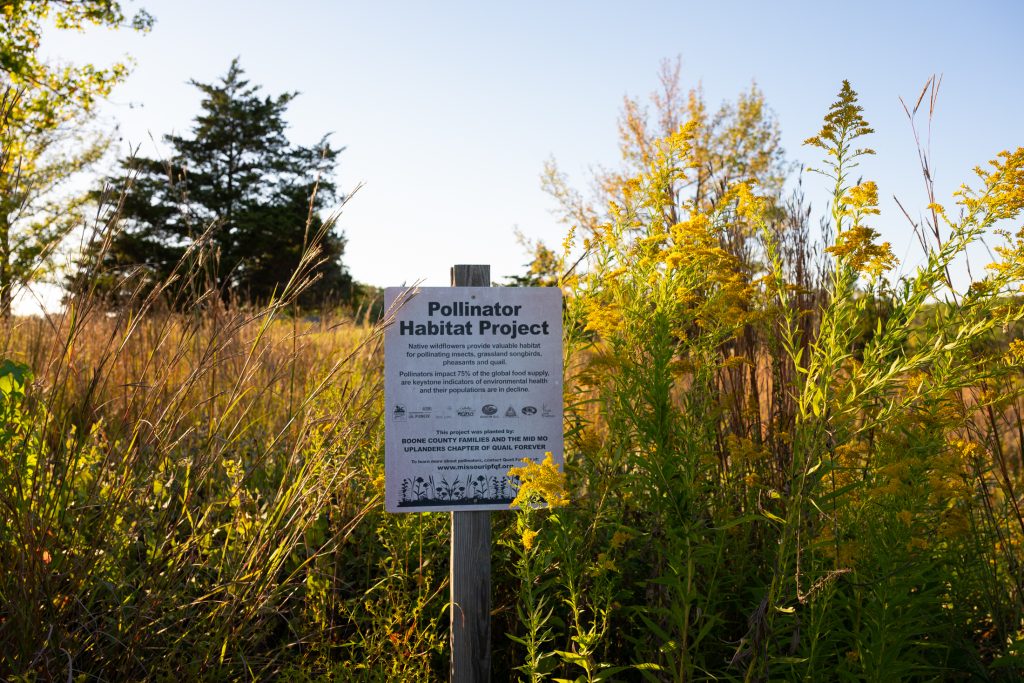 An interpretive sign on the A. L. Gustin Golf Course about the Pollinator Habitat Project. Photo by Stephen Bybee
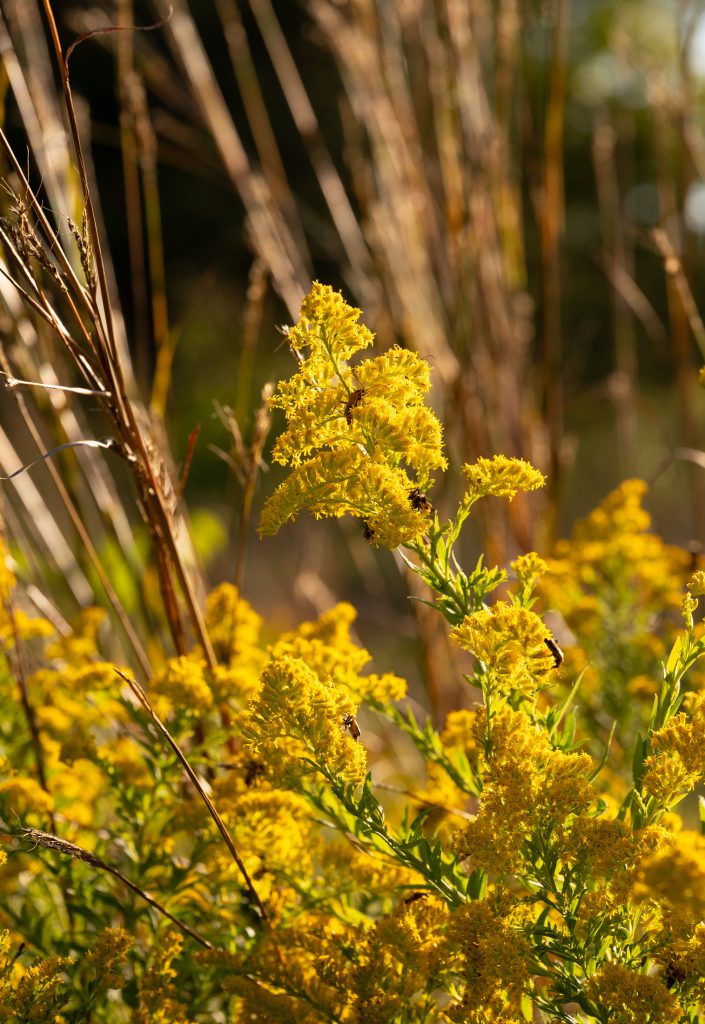 Goldenrod in a pollinator plot at A. L. Gustin Golf Course. Photo by Stephen Bybee
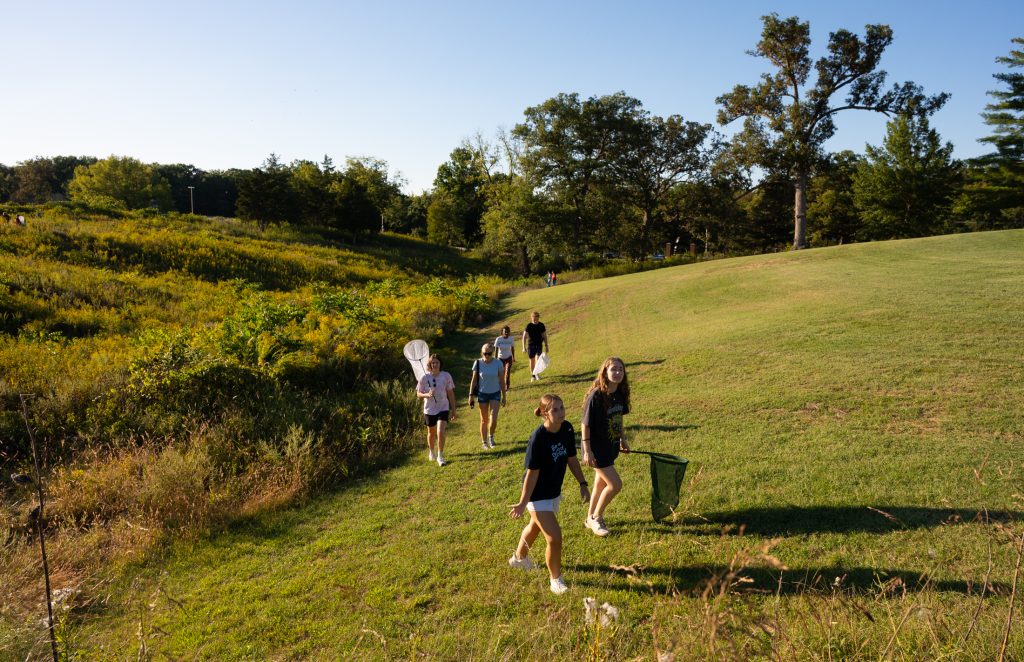 MU students search A. L. Gustin Golf Course for monarch butterflies. Photo by Stephen Bybee
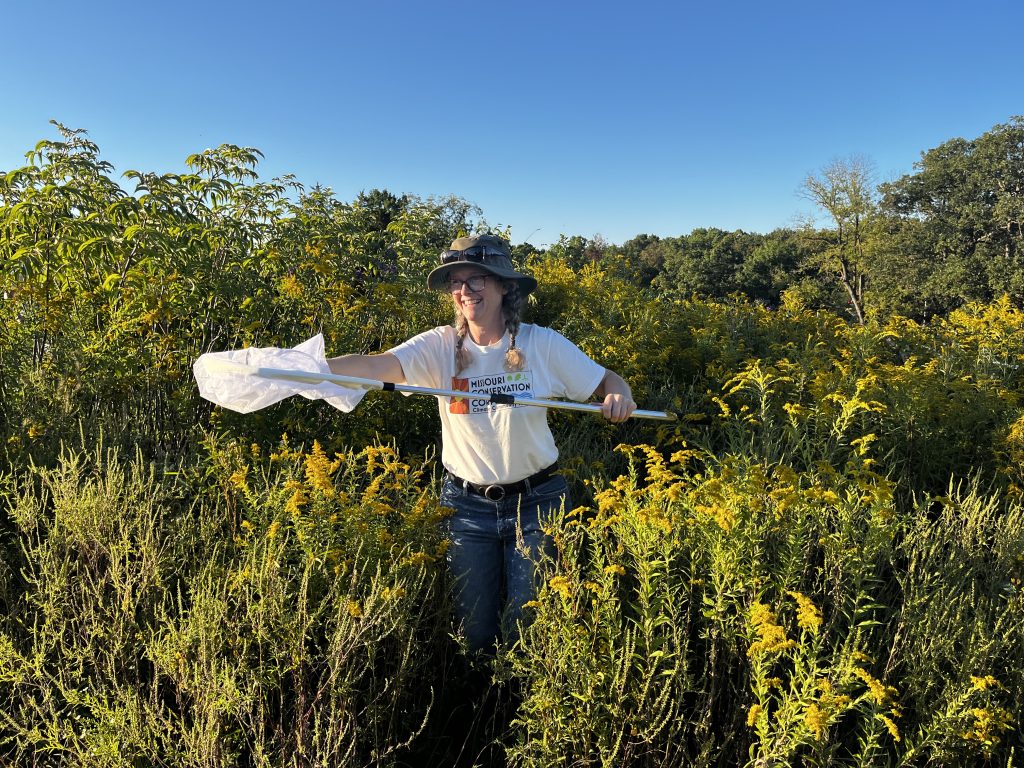 Laura Semken returning with a butterfly in her net. Photo by Anna Do
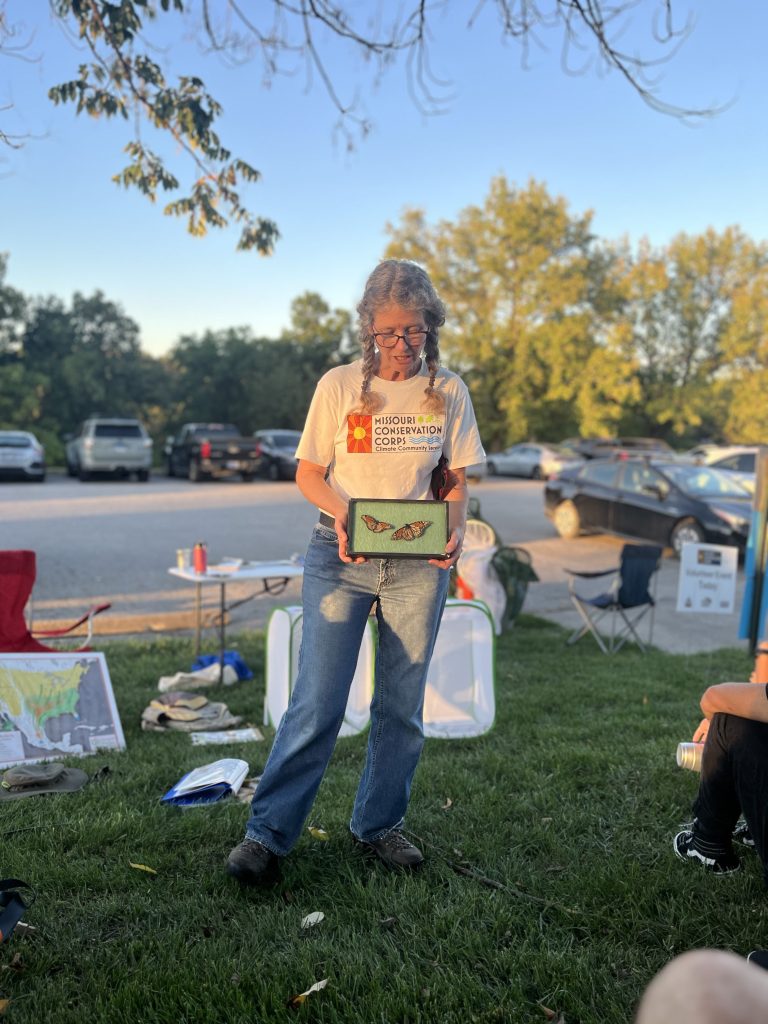 Laura Semken showing the difference between Monarchs and Viceroys. Photo by Anna Do
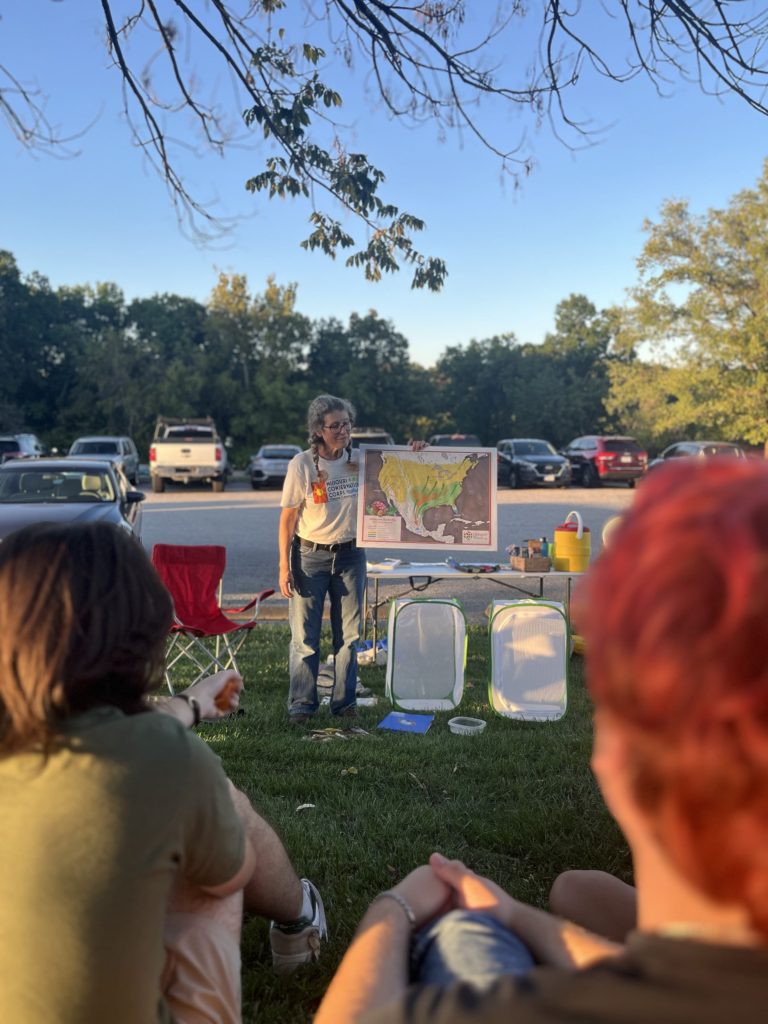 Laura Semken educating a group of students on monarch migration paths. Photo by Anna Do
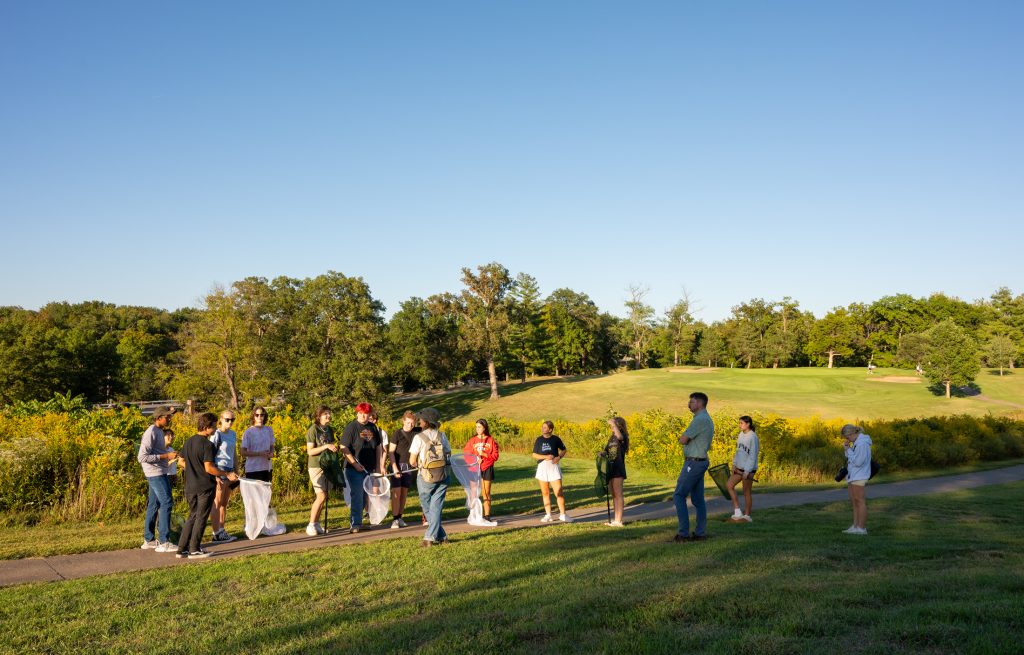 MU students gather around Laura Semken at the A. L. Gustin Golf Course. Photo by Stephen Bybee
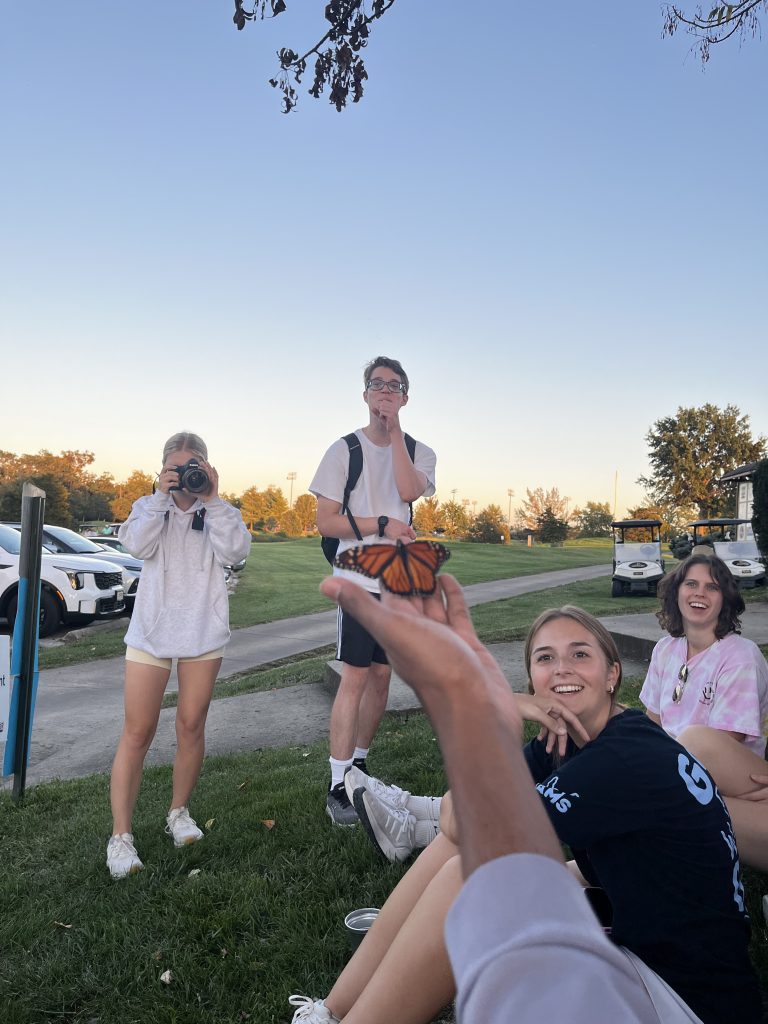 A monarch butterfly rests on an outstretched hand before taking off. Photo by Anna Do
These programs were made possible with the cooperation of Shawn Spence, Lavern Miller, Melody Kleinsorge, Isaac Breuer, Bradley Jones, Kristin Gibson, Shawn Hawks, Missouri Master Naturalists Boone’s Lick Chapter, Andrew Dreas with the Big Muddy NFWR, and Columbia Parks and Recreation. Additional support came from the Missouri Department of Conservation.
Article and report by Laura Semken
Edited by Anna Do
